

Finger and Wrist Yoga at the Office: Prevent Mouse Arm
Your wrists and hands are constantly under strain during your workday—learn how to take care of them!
Have you ever heard of mouse tendonitis ? Carpal tunnel syndrome is a condition affecting a growing number of workers who click, type, and text all day long: it can start as tension in the thumb, spread to the base of the wrist, travel up to the elbow and shoulder, and eventually cause tension in the neck. Lovely!
The natural position of the hand is the "crab" or "claw" position, meaning the inner edge of the hand (on the little-finger side) rests on the table, with the palms facing each other. The inventor of the computer mouse ignored this ergonomic principle: the mouse forces our wrist to rotate in a way it is not designed for. A joystick would have been much more suitable… In the palm of your hand, a large ligament protects the bones and nerves. The median nerve runs between the tendons below and the ligament above. This nerve supplies sensation to the first four fingers of the hand.
Over time, if you perform too many repetitive, improper movements, the median nerve can become compressed. The result: pain in the hand, numbness in the fingers, loss of strength, and a chain reaction throughout the entire arm. Mouse tendonitis is a classic example of musculoskeletal disorders and pain caused by an active lifestyle and computer work, but it’s not too late to prevent it. Regular yoga exercises to strengthen and stretch your wrists and hands can help.
The Sleepwalker
To relieve the hands of avid clickers (or gamers!)… Sit comfortably with your back straight and your shoulders relaxed. Extend your arms in front of you at shoulder height, fingers pointing forward, palms facing the floor. Inhale and lift your fingertips toward the ceiling to form a right angle between your arm and the back of your hand. Keep your arms straight and imagine you’re pushing your palms against a wall in front of you.
Take three deep breaths and feel the stretch inside your wrists. At the end of the third exhale, inhale and bring your fingers parallel to the floor. As you exhale, point your fingertips downward to once again form a right angle between the underside of your arms and the palms of your hands. Imagine pushing the backs of your hands against a wall in front of you. Take three deep breaths, feeling the stretch on the tops of your wrists. At the end of your final exhale, relax your arms… and resume normal activity.
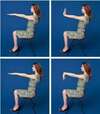
TO BE DONE AGAIN …
- When you've spent the whole day typing away at your keyboard
- When your wrists, hands, or forearms are causing you pain
BENEFITS
- Stretch the muscles in your hands, wrists, and forearms
- Helps prevent mouse-related tendonitis
WARNING: If you have carpal tunnel syndrome or an injury to your fingers or wrists.
The Pianist
Relax each of your fingers after a long day of typing on your keyboard. Sit comfortably with your back straight, extend your right arm straight out in front of you, with your palm facing forward.
Take two breaths here, then release your right hand and repeat the exercise with the other hand. With your left hand, grasp the tip of your thumb and pull it toward you as you inhale deeply. Exhale and release your thumb, then pull your index finger toward you while inhaling again. Coordinating with your breath, bring each finger of your right hand toward you, one by one, keeping your right arm straight.
Once you’ve stretched your little finger, bring all the fingers of your right hand together and gently stretch them toward you with your left hand. At the end of these strengthening and stretching exercises, give your hands one last treat… Shake them together—up and down, then side to side, and finally back and forth. Feel how your wrists are more flexible and lighter than before. If not? Start the session over from the beginning!

TO BE DONE AGAIN …
- When your fingers are numb and tired from typing on your keyboard
BENEFITS
- Stretch each finger and the muscles in your hands
- Helps prevent mouse-related tendonitis
WARNING: If you have carpal tunnel syndrome or an injury to your fingers or wrists.
Yogist helps prevent work-related pain for your employees, whether they spend their days sitting or standing
We can come to your office or conduct sessions via video conference